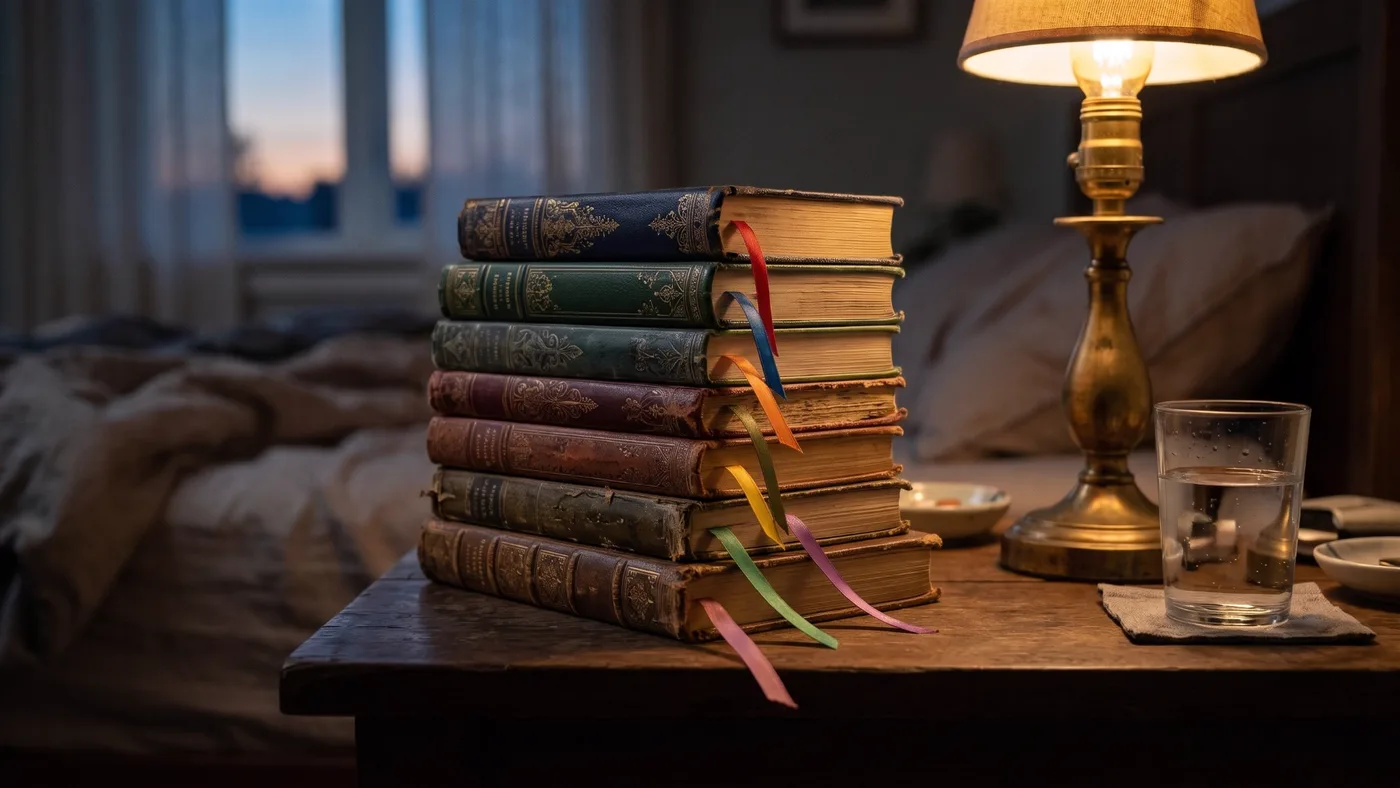
A short story is a small evening. You can finish one before the kettle cools, and the best ones stay with you all week. Here are seven collections, one for each night, so you can read a story or two each evening and keep a ribbon in the page.
Monday: warm and sharp
The Thing Around Your Neck by Chimamanda Ngozi Adichie (2009). Twelve stories about people moving between Nigeria and the United States, told clearly and with real feeling.
Tuesday: quiet and exact
Interpreter of Maladies by Jhumpa Lahiri (1999). Stories about families, distance and small moments that turn out to be big ones. It won the Pulitzer Prize for Fiction.
Wednesday: funny and true
A Manual for Cleaning Women by Lucia Berlin (2015). Short, vivid stories drawn from a hard and busy life, with a lot of humour in them.
Thursday: big ideas, small pages
Stories of Your Life and Others by Ted Chiang (2002). Thoughtful science fiction that is about people first. Read the title story if you only have time for one.
Friday: strange and kind
Tenth of December by George Saunders (2013). Odd, funny and surprisingly tender. A good book for a Friday night when you want your brain to wake up gently.
Saturday: lonely and lovely
Men Without Women by Haruki Murakami (2014). Seven stories about loneliness, told in his calm, slightly dreamlike voice.
Sunday: the classic
Dubliners by James Joyce (1914). Fifteen stories about ordinary Dublin lives. End the week with the last one, The Dead.
How to read them
- One story a night is plenty. Two is a treat.
- Use a ribbon or a slip of paper so you can pick up where you stopped.
- Skip around. Nobody checks whether you read a collection in order.
- If a story does not work for you, move to the next. That is what collections are for.
Most libraries keep all seven, and short stories are easy to borrow for a week.